Former Administrators
Past Temple Management Committee Members
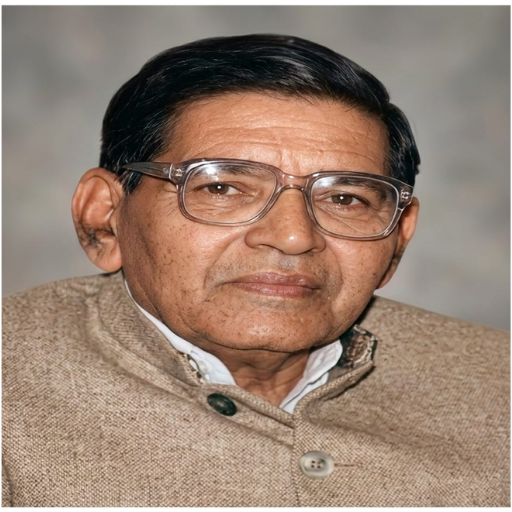
Shri Naval Bihari Lal Mathur
4th July 1913 – 2nd September 1988Shri Naval Bihari Lal Mathur son of Shri Sukhdev Bihari Lal Mathur (known as Raja Sahib Zamindar Royal family, Shikohabad) lovingly known as Navaldada was a devoted follower of Thakur Rajgopalji Maharaj and was a member trustee of Shri Thakur Rajgopalji Maharaj Virajman Mandir till 1988. Born in Madanpur, Uttar Pradesh, he was a prominent figure from Shikohabad, recognized for his contributions to education and public service.
He is remembered as a luminary within the community for maintaining family prestige through education rather than just land ownership. He remains a celebrated figure for his philanthropic work done throughout his life. He was a master in playing flute.
Professional Identity and Legal Legacy
As a Mathur Kayastha, he belonged to a traditional clan of scribes and administrators. His ancestors served as Qanungos (record-keepers) and intermediaries between the imperial center and local populace, managing law and order in their respective Thikanas. Later on, with the passage of time following the same lineage other family members were part of a legal elite in the Firozabad/Shikohabad region, often serving in High Courts and District Collectorates. Abiding with this legacy he was a prominent Vakil (Advocate), utilizing his professional training to navigate complex land-revenue laws. Thus, representing a unique bridge between India’s traditional elite and the modern legal system.
Institutional Leadership in Education
- In 1956, he served as a Founder Member of the Management Committee for Narain College and Narain Inter College. He helped lead this trust to address the regional need for higher education. His foundational work allowed the college to evolve from a small science stream into a major institution featuring Science, Arts, and Agriculture faculties.
- He also served as a committee member of Ahir Kshatriya College (now known as AKPG College) in Shikohabad, where he played a pivotal role in shaping the institution’s academic standards during its formative years.
- Apart from serving as a committee member in educational institutes, he donated land in Shikohabad for Chitragupta Mandir and started a school named Chitragupta Vidhyalaya.
Inclusive Leaderships
- He served as the president of Reethra Mandir Shikohabad.
- He served as the president of Kayastha Sabha Shikohabad.
- He served as a member of the Shikohabad Nagar Palika continuously for 18 years.
- He was the chairman of the Cattle Fair Association Uttar Pradesh.
- He was the trustee of Shri Radha Krishan Mandir until 1988.
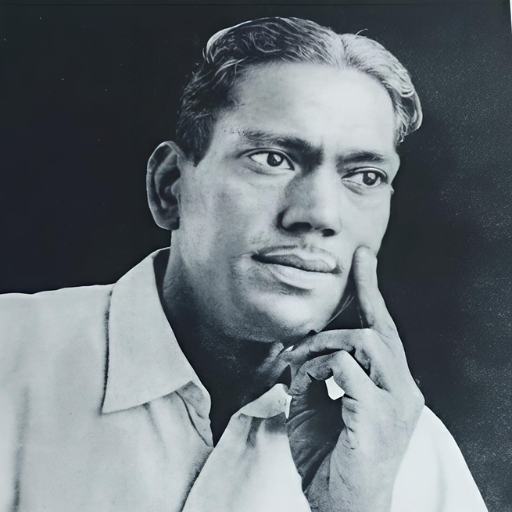
Shri Surendra Mohan Mathur
(Babuye Bhaisahab) | 1922–1991Shri Surendra Mohan Mathur son of Lala Shri Hari Mohan Lal Mathur, fondly remembered as Babuye Bhaisahab, was a respected trustee of Shri Thakur Rajgopalji Maharaj Virajman Mandir. He was a visionary leader and devoted community figure, he played a pivotal role in the social, administrative, and infrastructural development of Madanpur village.
Through his selfless service, strong leadership, and unwavering commitment to public welfare, he earned immense respect not only within the Mathur family but also among all residents of Madanpur. His role in maintaining administration and ensuring law and order during major religious events such as Ramlila and Brahmoutsava is still fondly remembered by the community.
Salient Initiatives and Contributions
- Foundation of Government School: Shri Surendra Mohan Mathur was instrumental in the establishment of the Government School (Madanpur Uchchattar Madhyamik Vidyalaya), serving as its founder and manager. The school initially operated from the Haveli and was later relocated to its own dedicated building, thereby strengthening educational infrastructure and ensuring improved access to quality education for future generations.
- Introduction of Electricity Supply: He played a key role in bringing electricity to Madanpur village, marking a major milestone in its modernization. This initiative transformed daily life, enabled development, and laid the groundwork for future progress.
- Construction of Approach Road and Establishment of Key Public Institutions: Shri Surendra Mohan Mathur worked along with Shree Krishan Das Mathur (Lalji Bhaisahab who was of IAS rank in 1960), recognizing the critical need for improved connectivity, personally obtained government sanction and oversaw the construction of the 8-kilometre approach road linking Sirsaganj with Madanpur. At a time when access to the village was limited, this initiative significantly enhanced connectivity and contributed meaningfully to the social and economic development of the region.
- Similarly, he was instrumental with his persistent efforts and coordination with authorities in the establishment of Key Public Institutions.
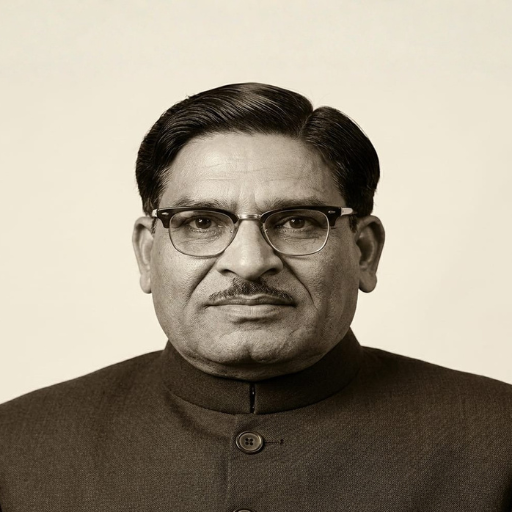
Hari Shankar Mathur
1925–2020Hari Shankar Mathur son of Shri Sukhdev Bihari Lal Mathur (known as Raja Sahib Zamindar Royal family, Shikohabad) born on 4th April 1925 in Madanpur was a prominent figure from Shikohabad. He was an IAS officer and was recognized for his contributions to administrative services. Apart from his administrative excellence he uniquely also contributed towards his spiritual legacy and served as member trustee of Shri Thakur Rajgopalji Maharaj Virajman Mandir, Madanpur (Uttar Pradesh) Managing Committee from 1988 till 1998.
Spiritual & Cultural Stewardship
- He led a very simple, disciplined and spiritual life. He was a meditation and yoga practiser.
- Vrindavan Connection: He was the manager of Shri Rangji Mandir, Vrindavan, bridging the gap between high-ranking civil service and ancient Sri Vaishnava traditions.
- He loved to sing and recite his poems. He also published a book of his poems called “Sopan”.
Administrative Leadership
- Labour Commissioner, Agra (during 1980s): Served as a pivotal mediator between industry and the workforce, ensuring labour welfare and industrial harmony during a period of significant regional growth.
- District Magistrate (DM) Barabanki: Recognized in the Barabanki Collectorate’s history for his transformative work during 1960s to early 1970s in land reforms and agricultural infrastructure.
- Secretary, Panchayati Raj, Lucknow (1980s): Served as the head of the Panchayati Raj Department, where he was instrumental in strengthening rural self-governance and local bodies across Uttar Pradesh.
- Managing Director (MD) of the State Spinning Mills Corporation: In the Mid-1970s – 1980s he led the state’s textile revolution as the Managing Director (MD) of the State Spinning Mills Corporation. Based in Kanpur’s Vastra Bhawan, he oversaw a vast network of mills that powered Uttar Pradesh's handloom and industrial sectors.
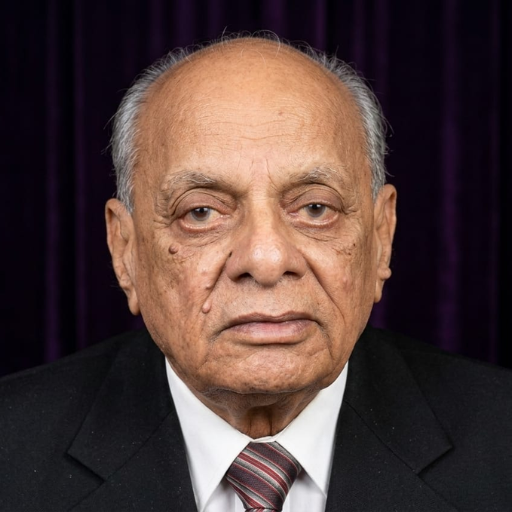
Shri Raghunandan Behari Mathur
1929–2011Shri Raghunandan Behari Mathur son of Shri Gopal Behari Lal Mathur was a revered personality of Madanpur, remembered for his distinguished life marked by integrity, devotion and unwavering commitment to his roots. He upheld the noble traditions and values of his family throughout his lifetime. He was a devoted follower of Shri Rajgopalji Maharaj and was an active member trustee of Shri Thakur Rajgopalji Maharaj Virajman Mandir’s Managerial Committee and played an active role in its growth and activities.
Cultural Contributions in Family
He was a great story teller and every family member keenly listen to his joyful stories about Family, Mandir traditions, his professional life etc. and cherished them greatly. He fondly plays harmonium over bhajans during Bharamoutsav festivities in Madanpur Mathur Haveli.
Academic & Professional Excellence
He was an alumnus of University of Allahabad and later pursued Aeronautical Engineering from London. Although being highly educated from London yet he remained firmly connected to his roots.
During his distinguished career with Indian Oil Corporation Limited, he served in various cities but unfailingly returned each year to his village for “Brahmoutsav-Madanpur Chaitra ka Mela” and also for “Jeth ka Mela.” - the grand summer animal fair that brought the entire community together in celebration. He cherished the simplicity of village life — the warmth of the people, the festive spirit and the deep-rooted traditions.
The villagers admired him not only for his education and achievements, but for his humility, devotion, and unwavering connection to Madanpur.