Sri Dhanurmasam
The Month of Divine Awakening (Margazhi)
A Spiritually Charged Period
Sri Dhanurmasam, is a spiritually charged period in the Vaishnavite tradition. It is believed that devotional activities performed during this month yield manifold benefits. Its primary significance is rooted in devotional service and the pursuit of divine blessings. Lord Krishan Himself declares in the Bhagavad-gita (10.35), "Of months I am Margashirsha" (Dhanurmasam is also known as Margashirsha or Margazhi masam). This highlights the month's supreme importance and the belief that the Lord manifests most during this time. The month emphasis on early morning prayers, ritualistic bathing, abstinence from indulgences, and a heightened focus on spiritual activities. This month is not just about devotion; it is a time for introspection, renewal, and forging a deeper connection with the Divine. It is a time to focus on acquiring knowledge, wisdom, and getting rid of worldly attachments to build a stronger connection with SriHari.
Significance and Key Aspects
- Arunodaya or Brahma Muhurta for worshiping Sri Hari: Lot of significance is given to Dhanurmasam in Vaishnava Sampradaya and all the Vishnu related temples perform special rituals and poojas early in the morning during this month. It is befitting for human beings to worship Lord Sri Maha Vishnu during the early hours approximately 96 minutes before sunrise when the stars are still twinkling in the sky, this auspicious period is known as Arunodaya or Brahmi Muhurtha. This incidentally coincides with the Dhanurmasam. Any worship conducted during Arunodaya time is said to be of highest quality that yield meritorious results. Every single step taken for an early morning dip in lakes and rivers is believed to confer the 'Punya' of performing an Ashvamedha Yaga. Worshipping Lord Vishnu even for a single day during Dhanurmasam is believed to be equivalent to worshipping Him for a thousand years in other months. So it is recommended to the devotees of Lord Vishnu to perform pujas and worship Him during the Brahma Muhurtha.
- Offering Moong dal Khichadi as prasadam to Lord Vishnu: During Dhanurmasam a special dish known as Moong dal Khichadi in Northern India and Huggi (Mudganna), sweet Pongal, Kara Pongal, Pulihora in Southern India is prepared with Rice and Moong dal mixed in equal proportions, is offered to Lord Sri Maha Vishnu as Naivedya and distributing the same as to the devotees. There is also a health significance attached in prescribing these food items during Dhanurmasam.
- Dhanurmasa Vratas (Katyayani Vratam) and Festival (Bhogi Festival) during Dhanurmas: The observance of 'Dhanurmasa Vratam' has been in vogue since time immemorial. It was first narrated by the Lord Brahma to sage Narada. It was Sage Narada who first prescribed the "Katyayani Vratam" to Gopikas to deserve the blessings of Lord Krishna who on the completion of the Vrata, gave His Darshan to the Gopikas and removed all their troubles.
The Legend of Andal (Goda Devi)
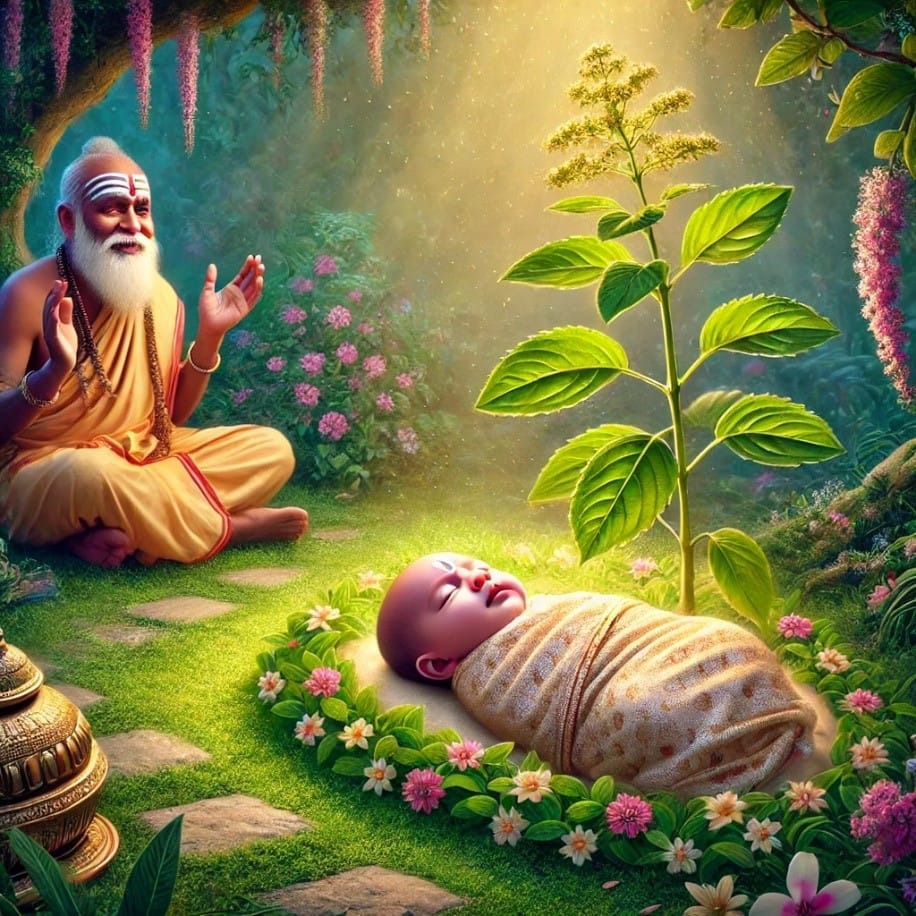
Discovery of the Divine Child
It is also believed that Andal, also known as Goda Devi, is one of the twelve Alvars born in Srivilliputhur, Tamil Nadu, her life is a testimony to unwavering devotion.
As she grew, Andal developed an unparalleled love for Lord Vishnu and imagined herself as his bride. On the advice of her father, Vishnuchitta (Perialwar), performed 'Pavai Nombu' to achieve oneness with Sri Ranganatha (Lord Vishnu).
Union with the Divine
She composed the Tiruppavai, a collection of 30 verses (pasurams), reciting one each day of the month as part of her observance. She composes all her experiences and feelings in the form of 'Pasuram'. In this way, she composed 30 Pasurams and dedicated them to the Lord Vishnu.
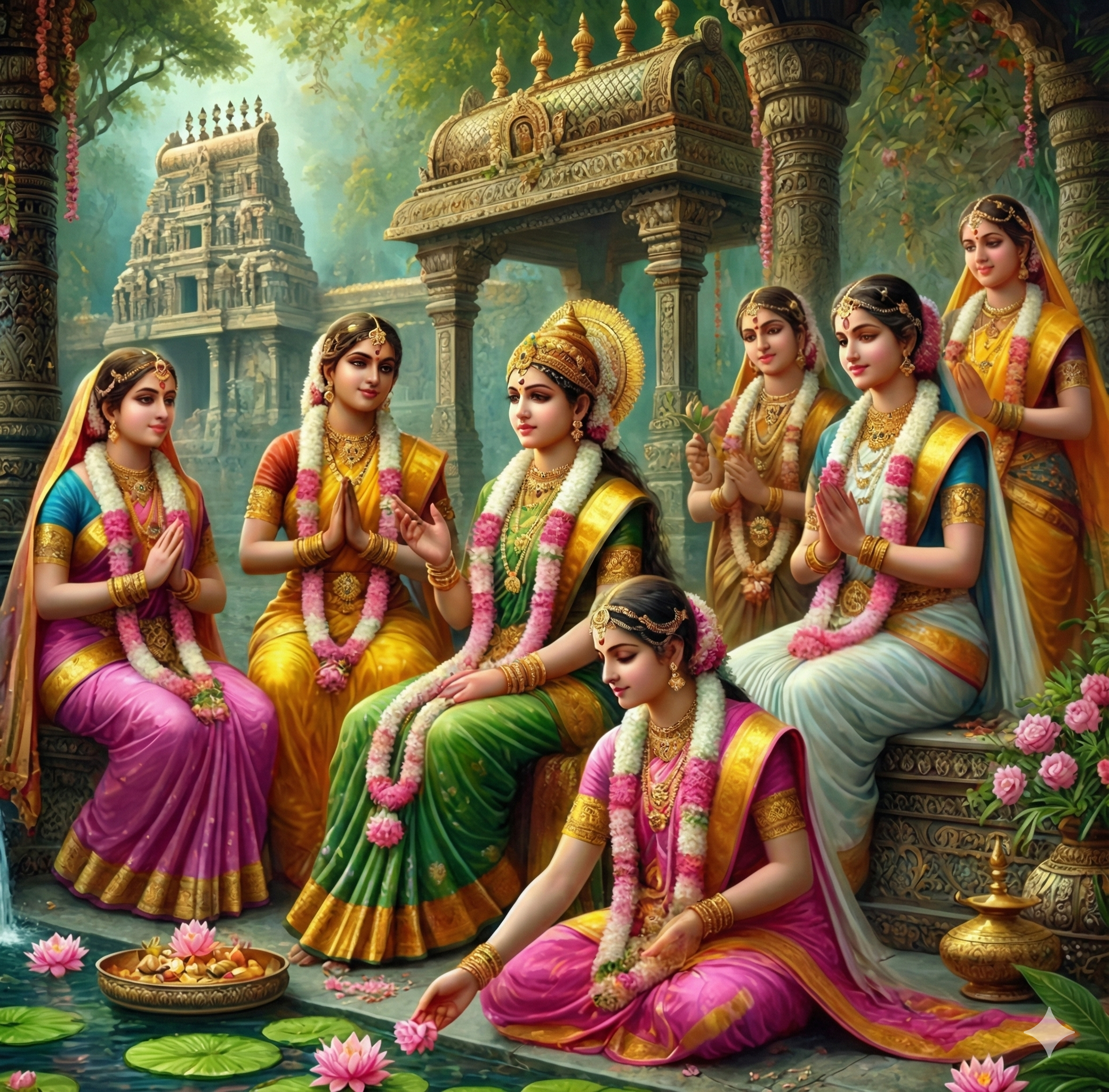
Pleased with her devotion, Lord Vishnu invited her to Srirangam. As soon as her wedding is celebrated with Sri Ranganatha, she kneels at his feet and attains eternity. On the same node it is believed that unmarried girls or women who observe the Dhanurmasa Vratam will be blessed with good husbands, just as Goda Devi achieved union with the Lord.
Ultimately, observing Sri Dhanurmasam is believed to bestow health, wealth, peace, prosperity, and ultimately, salvation (moksha or Vishnu Loka prapti).
Dhanurmasam is also considered 'Sunyamasa' and is declared unsuitable for mundane celebrations such as marriages, housewarmings, and purchase of property etc. Because it is the period of the sun entering ‘Dhanur Rasi' and passing on to ‘Makara Rasi'. According to the Shastras, when the sun is in the ‘Dhanu' and 'Meena' (Sagittarius and Pisces) residing with 'Brihaspati', (Jupiter) all activities such as marriage or house warming etc are forbidden. Only prayers and godly functions are performed during the period. This ensures a festive climate during which everyone is peaceful, pleasant and happy without being burdened with other activities.
Dhanurmasa Utsav at Madanpur
(16th Dec 2025 - 14th January 2026)
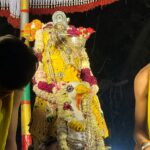
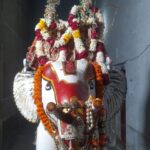
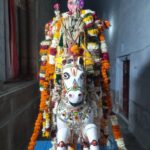
Shri Thakur Rajgopalji Maharaj Virjman Mandir Madanpur
Shri Thakur Rajgopalji Maharaj temple observes the Dhanurmasa Utsav with great fervor, incorporating local traditions related to agriculture and cattle-rearing alongside scriptural rituals.
- Khichadi Bhog Distribution: A unique feature is the daily distribution of khichadi bhog (prasadam) with green chutney at 5:30 am every morning throughout Dhanurmasa.
- Recitation of Scriptures: During the 'Dhanurmasa, as part of the waking up ritual at Temple, the priests recite Tiruppavai instead of the usual Suprabhata. 'Bilva Patras' instead of 'Tulasi' is used while reciting the 'Sahasranama' (thousand names of the lord) of the Lord.
- Dan and Charity: The observance emphasizes performing pious deeds and giving alms (dan) to the poor and Brahmins, with a focus on feeding the hungry, which is considered a highly meritorious act during this time.
- Agricultural and Cattle Rearing Integration: Since the temple is located in a village, its Utsav blends with local agricultural and cattle-rearing traditions. This likely includes practices such as:
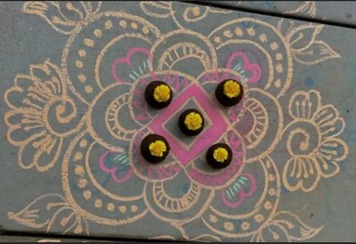
Rangoli and Gobbimmas
Young girls who have come of age get their wishes fulfilled by decorating the front porch of their houses with colourful rangoli and worshipping 'Gobbimmas.' Gobbimmas are the balls made of cow dung. They are decorated with turmeric powder (Pasupu), red vermilion powder (Kumkuma), flowers and different types of grains.
Harvest Connection: The timing of Dhanurmasa overlaps with the harvest season in some regions (ending with the Pongal/Makar Sankranti harvest festival), and the khichadi offering itself uses freshly harvested rice and dal, linking the spiritual observances with the community's agricultural cycle and gratitude for a good yield.
Seva Opportunities
Shri Thakur Rajgopalji Maharaj Mandir invites you all to participate in the grand Dhanurmasam celebrations. Let the sacred vibrations of Goda devi’s (Andal) Tiruppavai fill your heart with divine love and peace. Whether you are a seasoned devotee or new to this tradition, this is your opportunity to experience the transformative power of devotion.