SHRI THAKUR RAJGOPAL JI TEMPLE

Shri Thakur Rajgopal Ji Maharaj Ki Jai !
Srimate Ramanujaya Namaha !

Sri Brahmoutsav

The Grandest Festival of Sri Vaishnava Tradition

The Legend of First Brahmoutsav
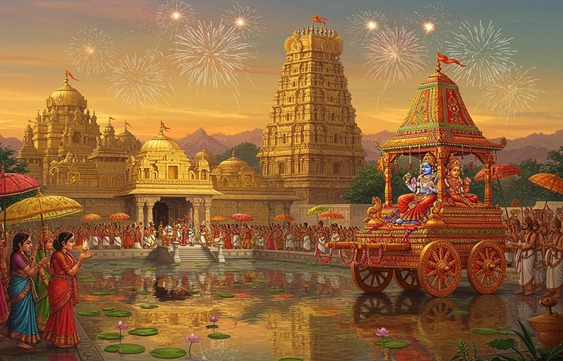
A Temple during Sri Brahmoutsav

Brahmoutsava is named after Lord Brahma and is the biggest festival celebrated in all Sri vaishnava temples. Brahmoutsava means a festival offering by Brahmaji to Lord Vishnu. It is said that the Lord Brahma himself rendered the first Brahmoutsavam seva (service) to Lord Venkateshwara (Vishnu) to thank Lord for protecting mankind.

As the legend goes, Lord Indra once killed a Brahma-raakshasa (a Brahmin with demoniac characteristics). In doing so, he incurred a great sin of killing a Brahmana- Brahma hatya dosham. To relieve Indra of this burden, Lord Brahma conducted a ceremony. In this ceremony, officiated by Brahma himself, Indra held Sriman Narayana (Lord Vishnu) on his head during the special ritual bath “Avabritha Snaanam”. This verily was the first Brahmotsavam.

Because of the immense cleansing power of Brahmotsavam, this utsavam is periodically performed in temples to wash away all wrong doings that may have been incurred. Indeed, it is a common belief that every Brahmotsavam is witnessed by Lord Brahma.

Key Events of Brahmotsavam

  • Mritsangrahana (मृत्संग्रहण): Collecting the soil for Brahmotsava Yagna (Hawan, Fire ceremony) Peetam.
  • Ankuraropan (अंकुरारोपण): Planting 9 grains in soil placed in earthen dishes.
  • Rakshabandhan: Tying sacred thread to Utsava vigraha (उत्सव विग्रह) and priests.
  • Procession of Vishvaksenar (विश्वकसेन जी): (Commander-in-chief of Vishnu’s army) to supervise arrangements made for Brahmotsavam.
  • Yaga Shaala Entry: Vishvaksenar returns from procession and enters the Yaga Shaala (Place where Yagnam is conducted), where he is received with Poorna Kumbham honor (special Pot filled with water). He is believed to be the Pradhana Yajaman (Chief conductor) of this Yagnam.
  • Dwajaarohanam (ध्वजारोहण): Garuda Dwajam- a flag bearing the emblem of Garuda. The Eagle- Vehicle of Vishnu) is hoisted with Veda Mantrams from mandir sheersh. This signal start of Brahmotsavam. Once the flag is hoisted, it is expected that no householder leaves town or plans any auspicious ceremony in the house until the conclusion of Brahmotsavam. Thus, the whole town is able to fully take part in the celebration and not be preoccupied with other personal activities. Even if someone has to leave town on emergency, they are expected to return prior to un-hoisting the flag (Dwaja-awarohanam) (ध्वजा अवरोहण) on day.
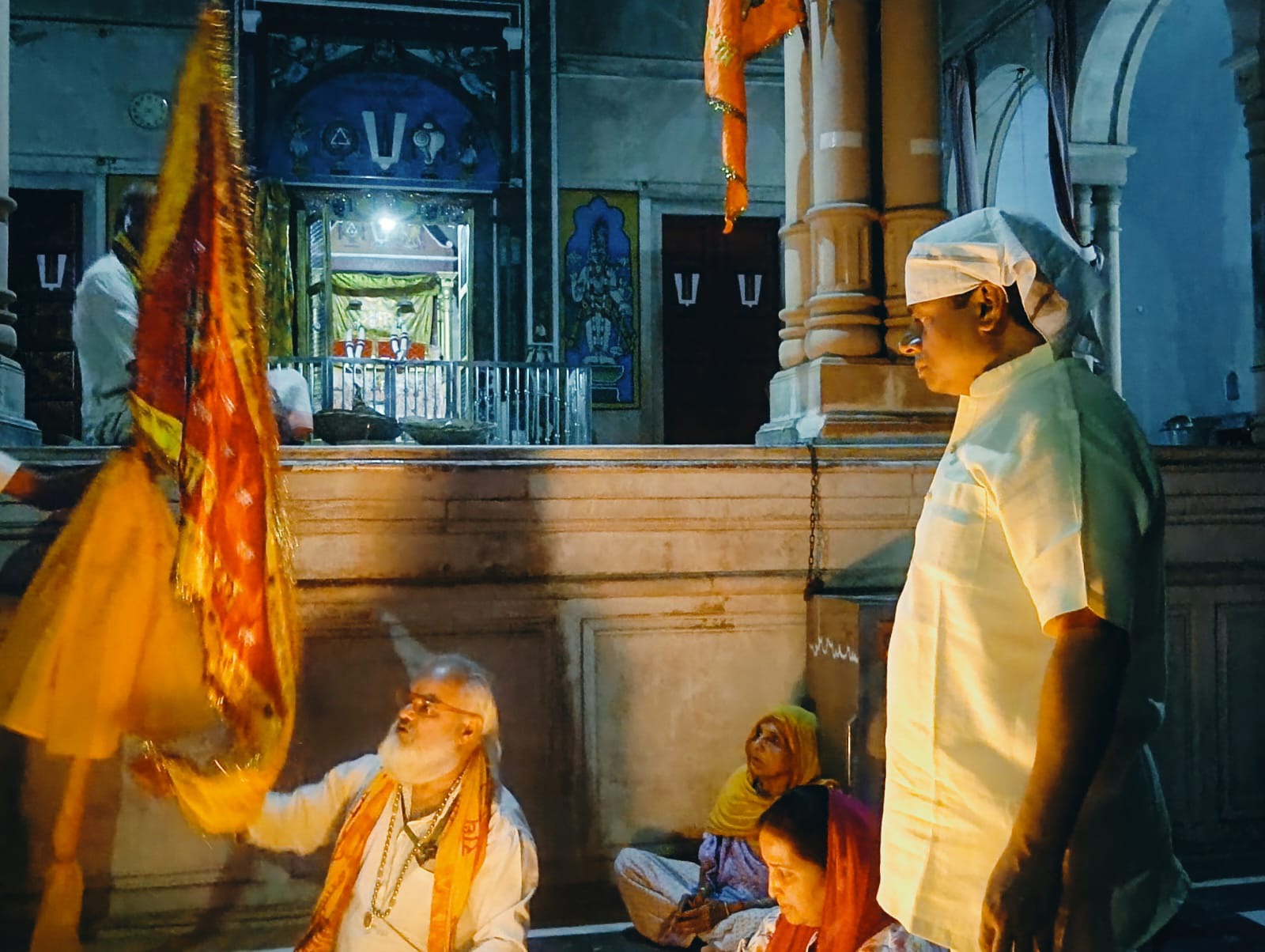
Dwajaarohanam

Vahan Seva

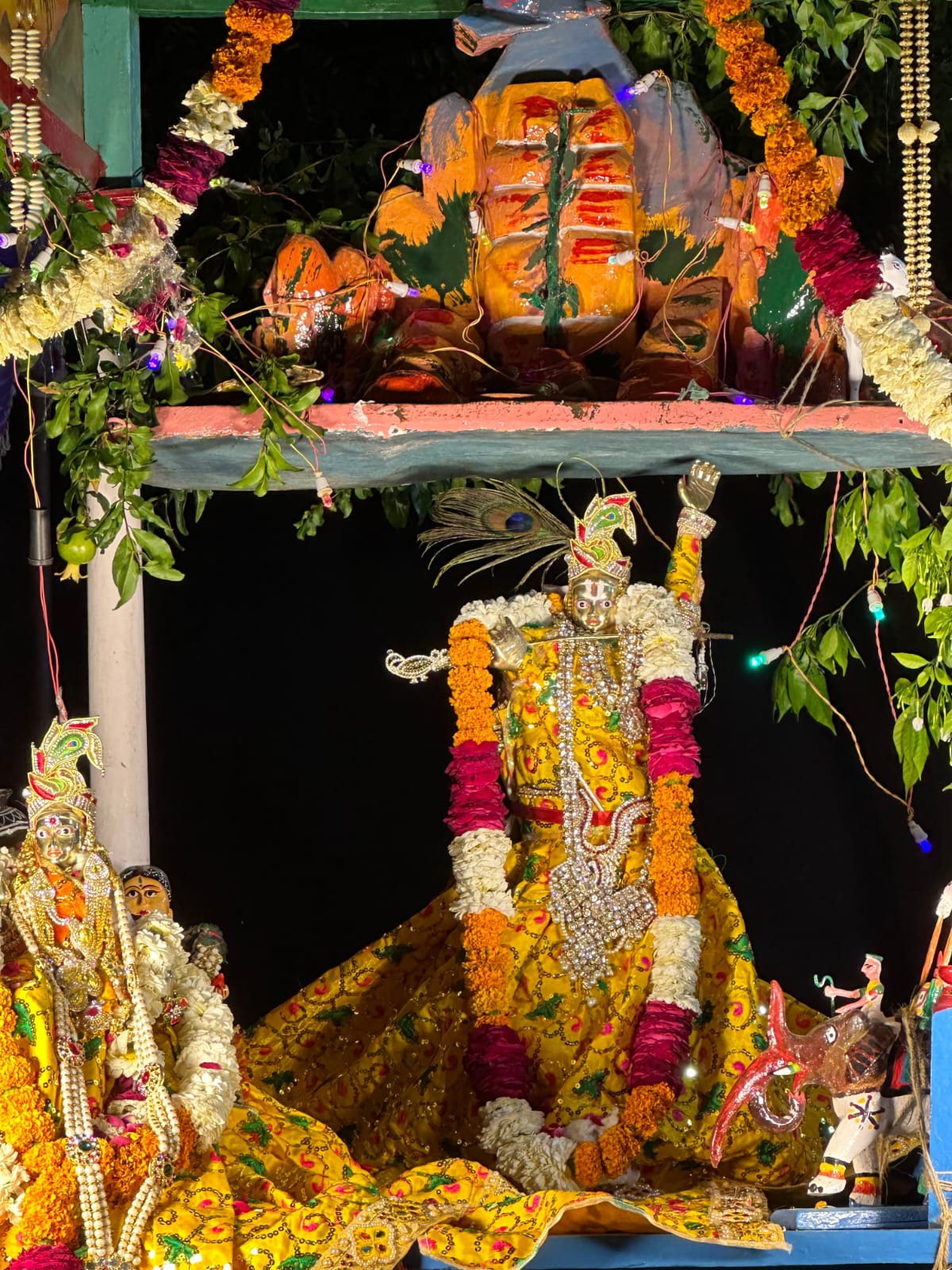
During Brahmotsavam at Sri Thakur Rajgopalji Maharaj Mandir, Thakur Rajgopalji Maharaj and Ammaji are taken out in grand processions on various vehicles (vahanas) each day. Each vahana has its own significance, and conveys the Lord’s message in its own way.
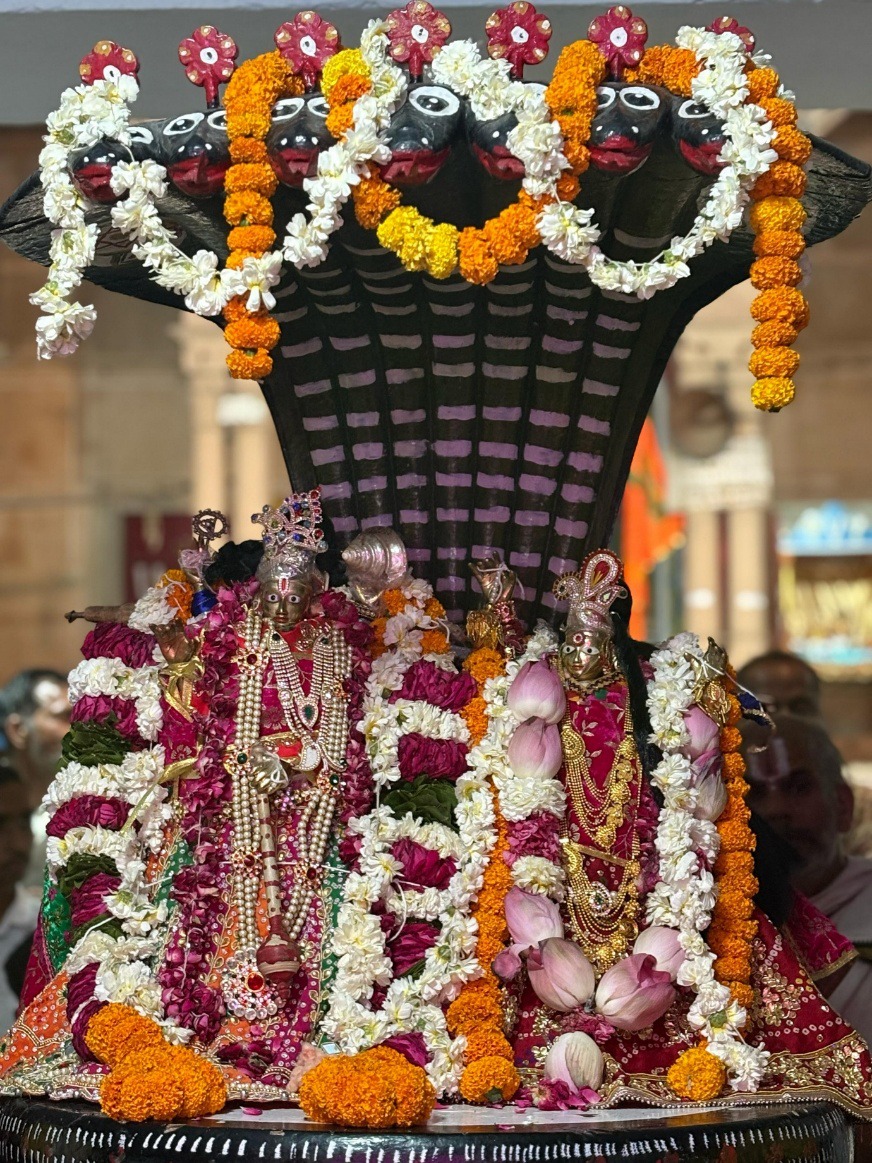
(i) Shri Sheshnag Vahan
Lord Shripati Narayan sits on Sheshji in Vaikuntha Lok and in Kshirabdhi. Lord Vishnu appears at Sheshji, whose darshan leads to attainment of Vaikuntha world and also it provides salvation to our ancestors.
Shri Sheshnag Vahan
(ii) Shri Govardhan Vahan
The significance of the Shri Govardhan Vahan (lifting of Govardhan Hill) lies in the Hindu belief that Lord Krishna performed this act to protect the residents of Vrindavan from the wrath of Lord Indra, teaching lessons of divine protection, the power of devotion (bhakti), humility, and the importance of respecting nature. Lord Krishna, along with the people of Vrindavan, understood that it was not Indra but the land itself that provided everything they needed. They realized that their crops grew, their cattle thrived, and their lives flourished because of the blessings of Mother Earth. So, Lord Krishna decided to change the focus of the celebrations from Indra to Govardhan Parvat, a sacred hill that provided shelter and sustenance to their livestock.
Shri Goverdhan Vahan
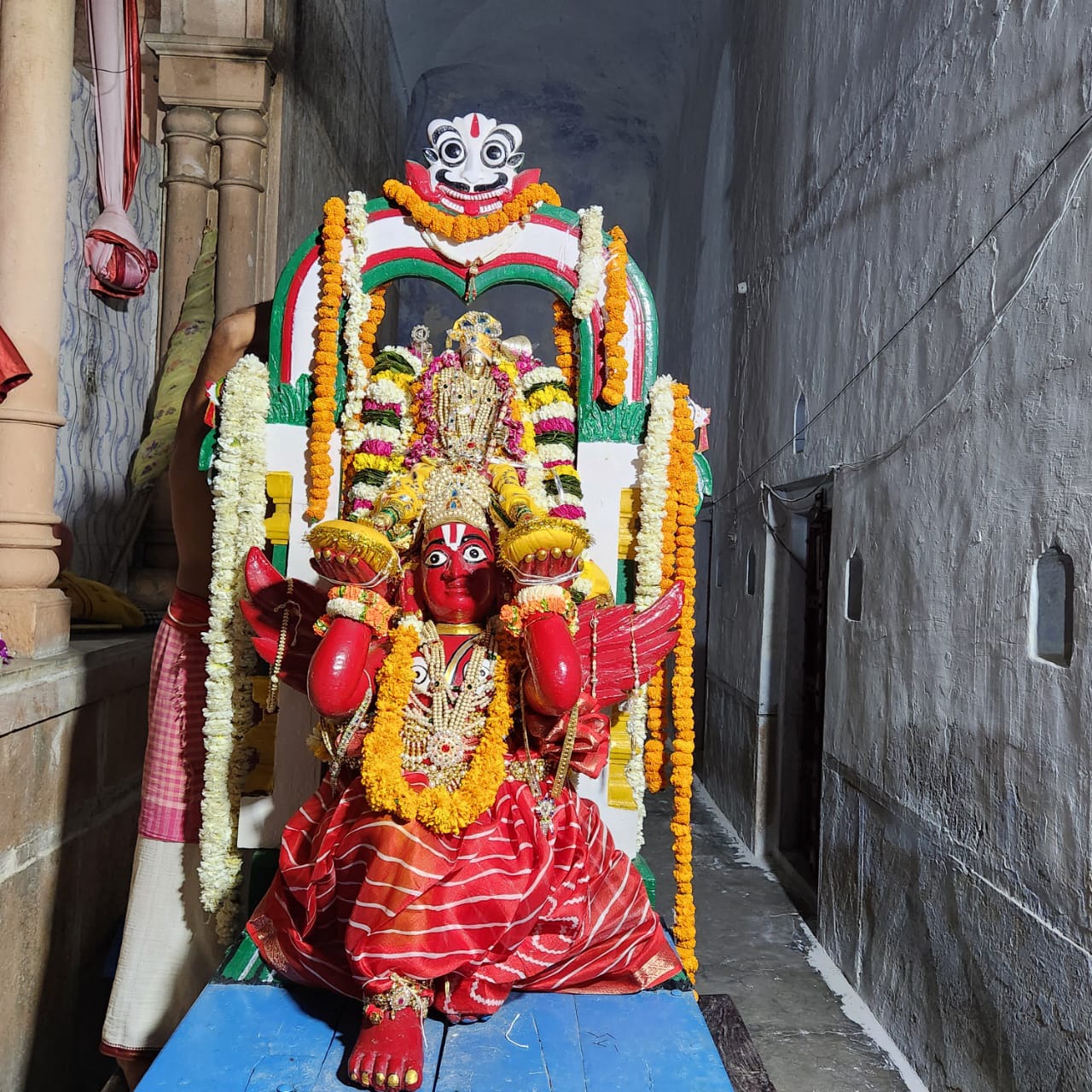
(iii) Shri Garuda Vahan
The bird king Garuda Ji is the soul of the Vedas. Vedatma Vihgeswara: The Samaveda is sung in his wings. The Lord of the Vedas sits on Garuda. Vedavedya God sits on Garuda Ji - Vedaishcha Savirahamev Vaidya. Sitting on this vehicle, the Lord had freed the elephant from the trap of the planets, hence by seeing it, the cruel planets are pacified, nightmares go away. The fruits of reciting the Vedas are achieved and one gets freedom from getting the bird's birth.
Shri Garuda Vahan
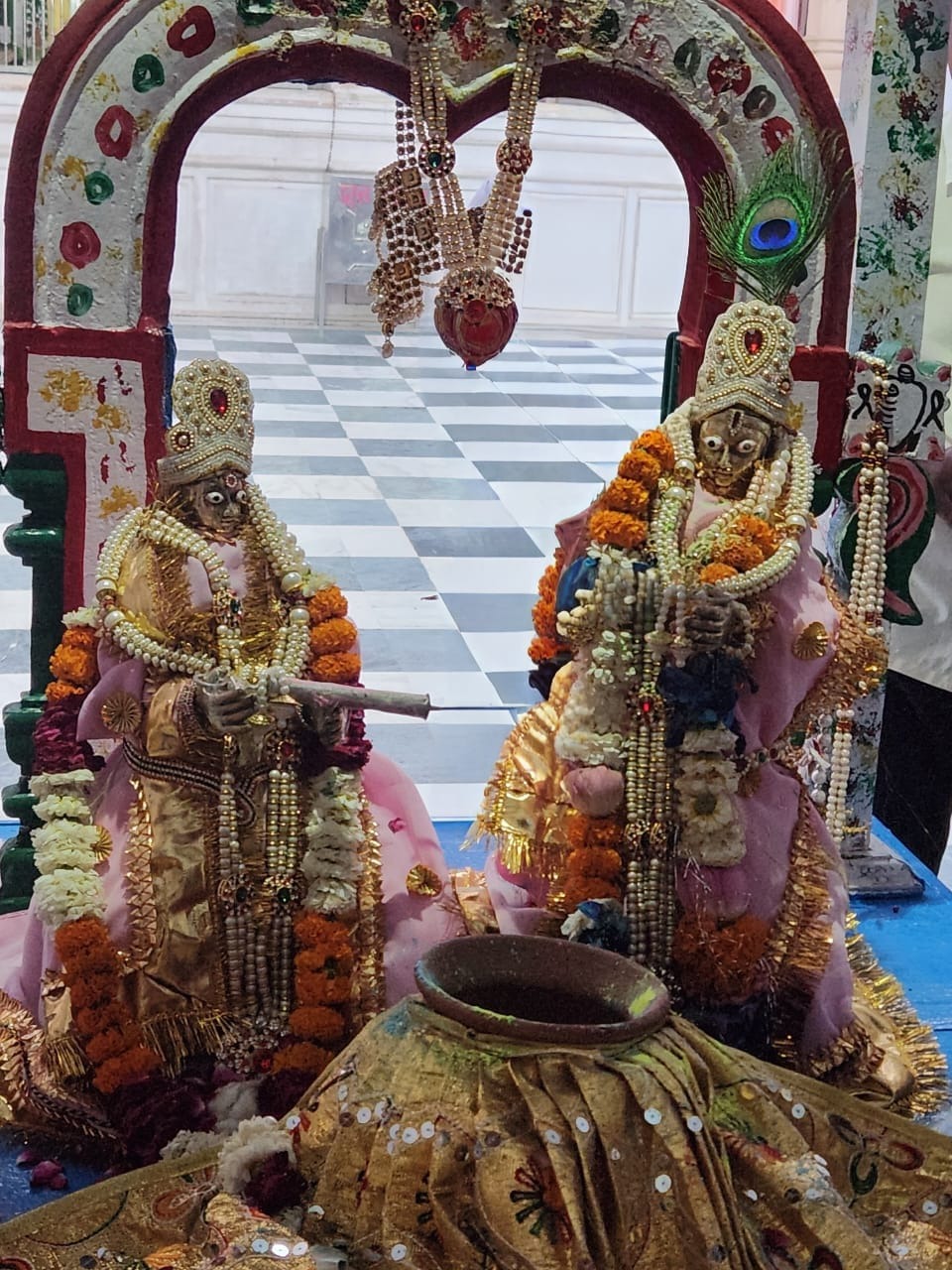
(iv) Shri Poornakothi Vahan (Holi Leela)
Shri Thakur Rajgopal Ji Maharaj resides in Madanpur in the form of Shri Radha Krishna. Sitting in Vrindavan, the heart of Braj, this festival of God delights the devotees. He adorns them externally with abir and colors, and their inner selves with his devotion and service. By seeing it one attains friendship and closeness to service.
Shri Poornakothi Vahan
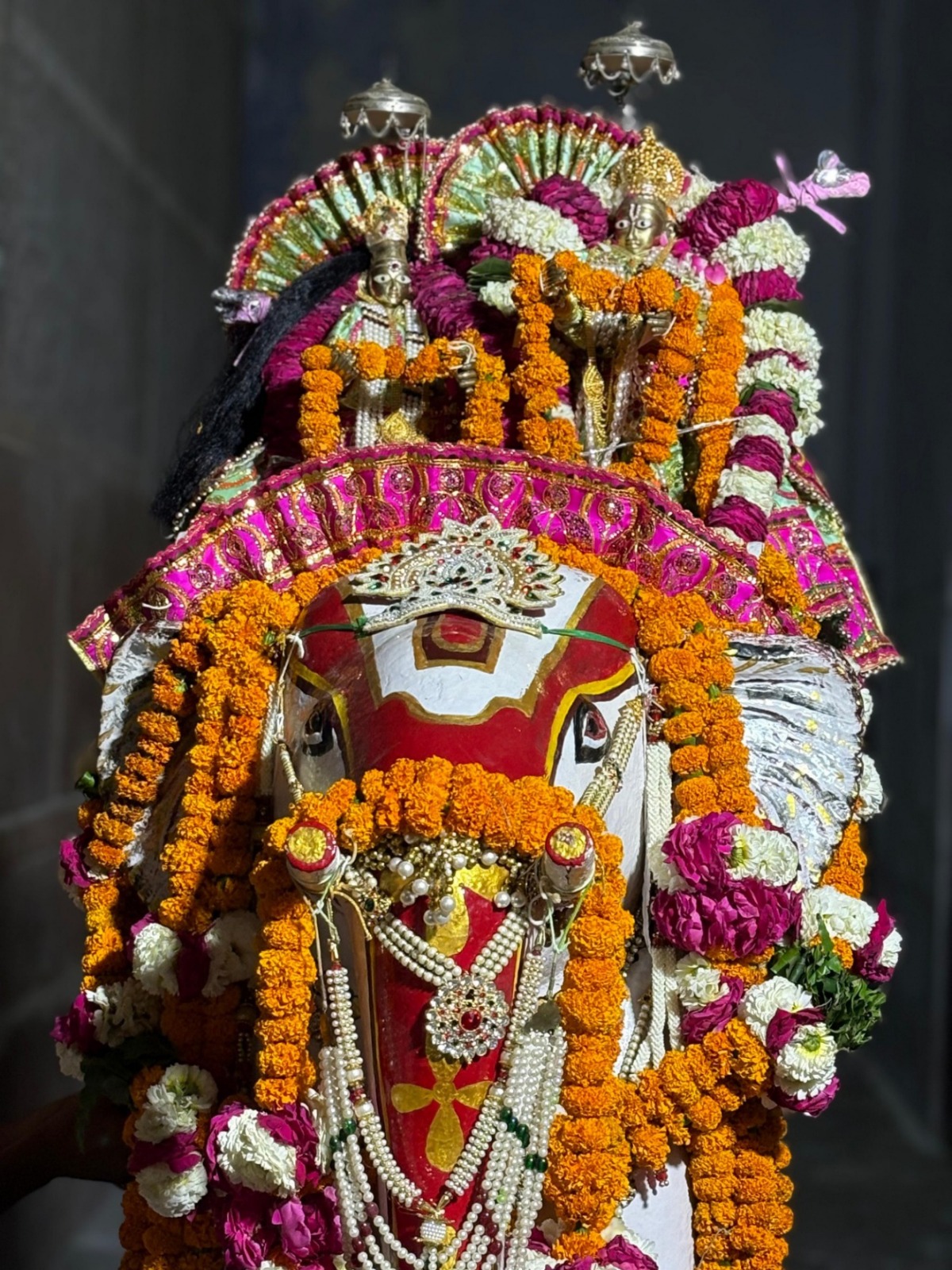
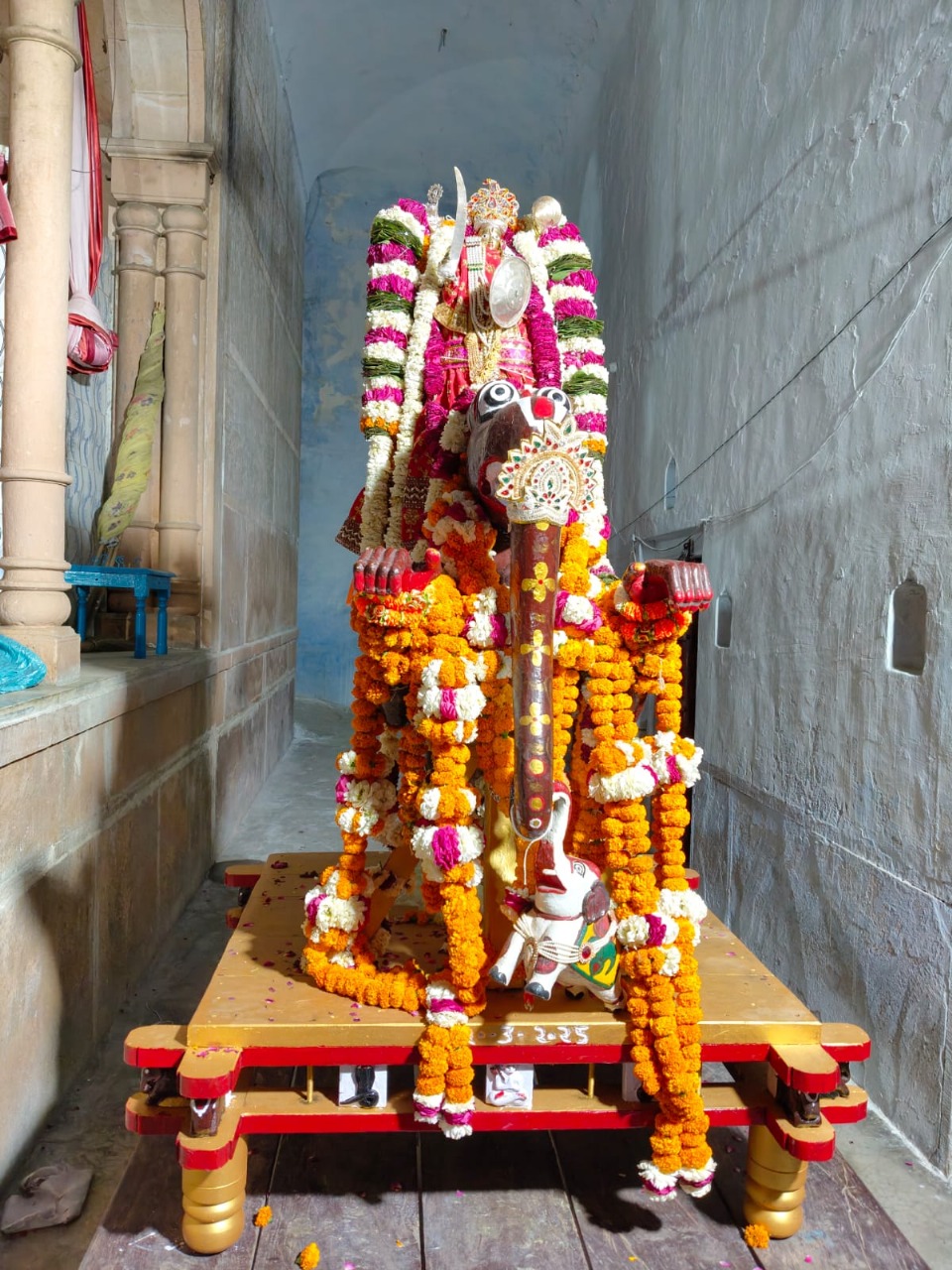
(v) Shri Gaja Vahan
It is significant because it symbolizes wealth, majesty, and the power of Lord Vishnu to rescue devotees from troubles, referencing both the myth of Gajendra the elephant and the vehicle of Indra, Airavatam. It also represents prosperity as the elephant is the vehicle of Goddess Lakshmi, and the deity riding it is believed to bless devotees with wealth and save them from difficulties.
Shri Gaja Vahan
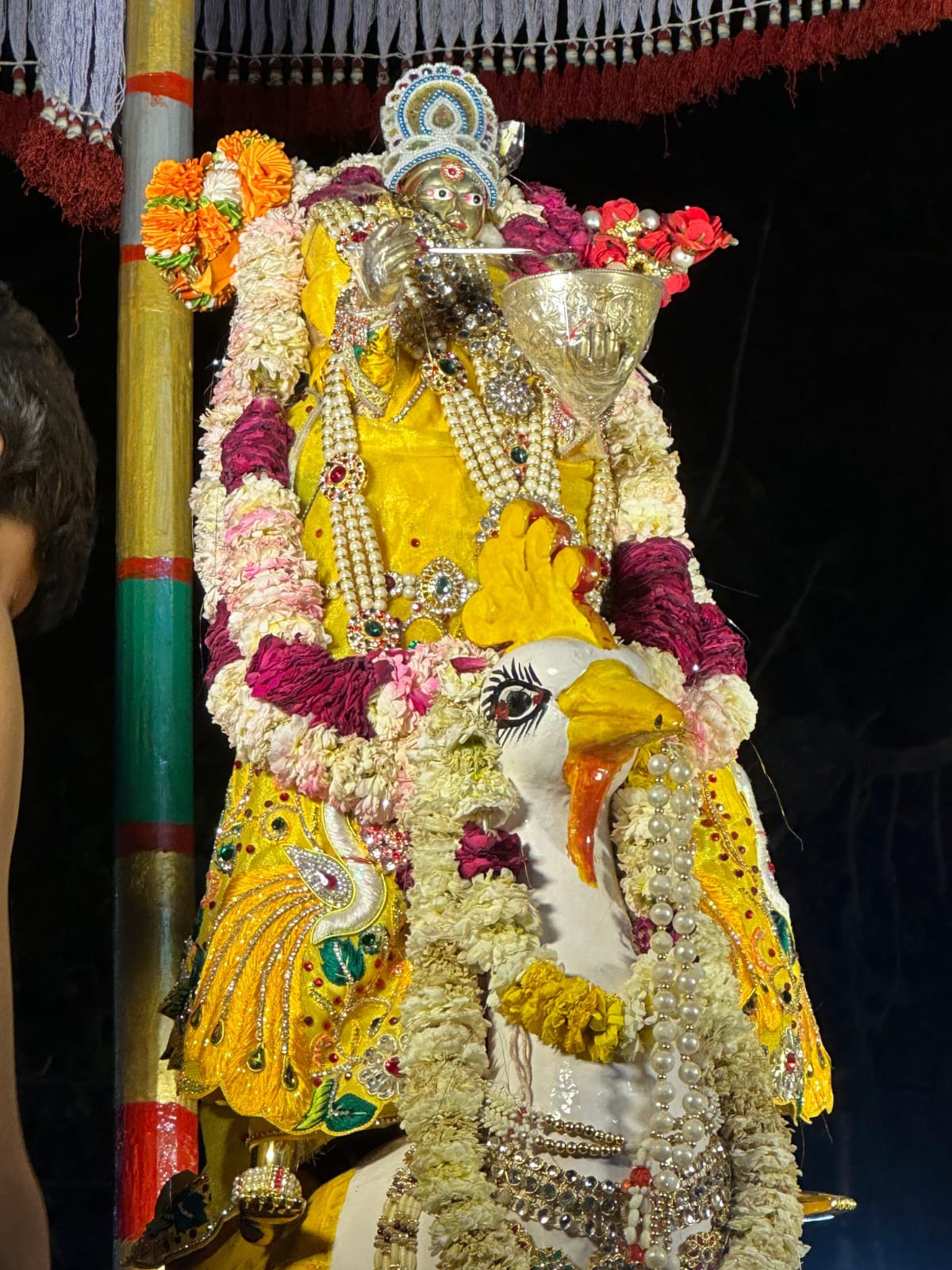
(vi) Shri Hansa Vahan
Shri Hansa Vahan (Swan, or Hamsa Vahan) is highly significant in Hinduism as the sacred vehicle (vahan) of several deities, most notably Lord Brahma and Goddess Saraswati. The significance stems from the rich symbolism associated with the hamsa bird itself, which represents profound spiritual virtues. Represents knowledge, wisdom, purity, and the realization of the Supreme Being.
Shri Hansa Vahan
(vii) Shri Simha Shaardool Vahan
God's words are, "I want the strength of the strong." In the Nandanvan, a heavenly forest, the mighty animal called Singh Shardul is known as the king of the forest. It has a lion-like face, a trunk, and huge wings. It can carry an elephant with its trunk and fly through the sky, but within it, only the power granted by the Lord Himself works. Seeing the Lord on this vehicle dispels fear and bestows strength and valor.
Simha Shaardool Vahan
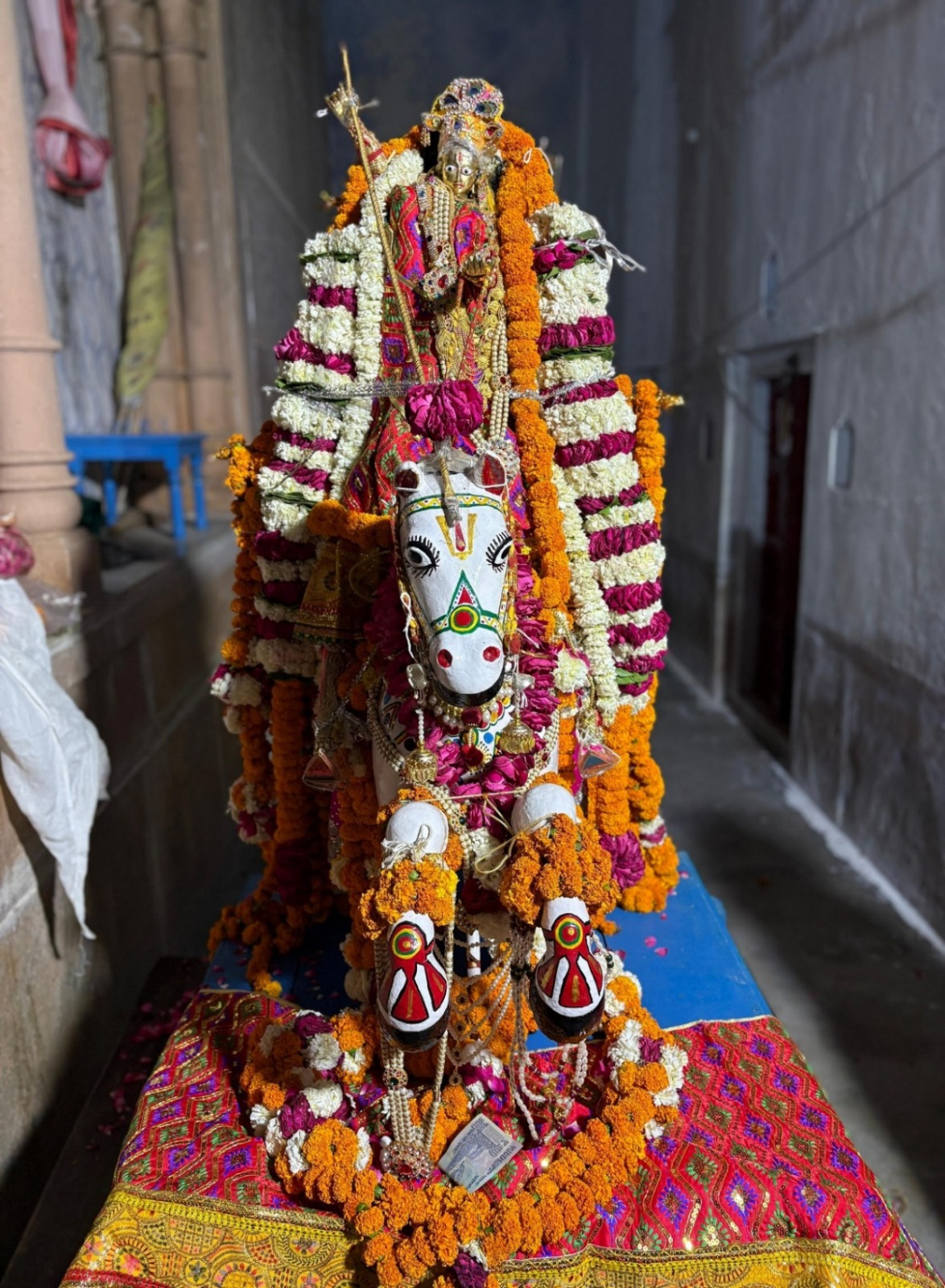
(viii) Shri Ashva Vahan
Symbolizes the coming Kalki Avatar, the final incarnation of Lord Vishnu. It also represents the lord's prowess in hunting and the divine form of Hayagreeva. Lord Rajgopal arrives at the temple riding a horse, carrying a shield, sword, spear, etc. By seeing this ride one gets peace and independence from poverty, sorrow and fear.
Shri Ashva Vahan
  • Dwajavarohanam (ध्वजा अवरोहण): The festivities end with the lowering of the flag.
  • Other activities: The festival also includes other rituals like the cleaning of the temple (Aalaya Suddhi), ceremonial bathing (Snapanam), and anointing the deity with sandalwood powder (Choornabhishekam).

Sri Brahmotsavam at Madanpur

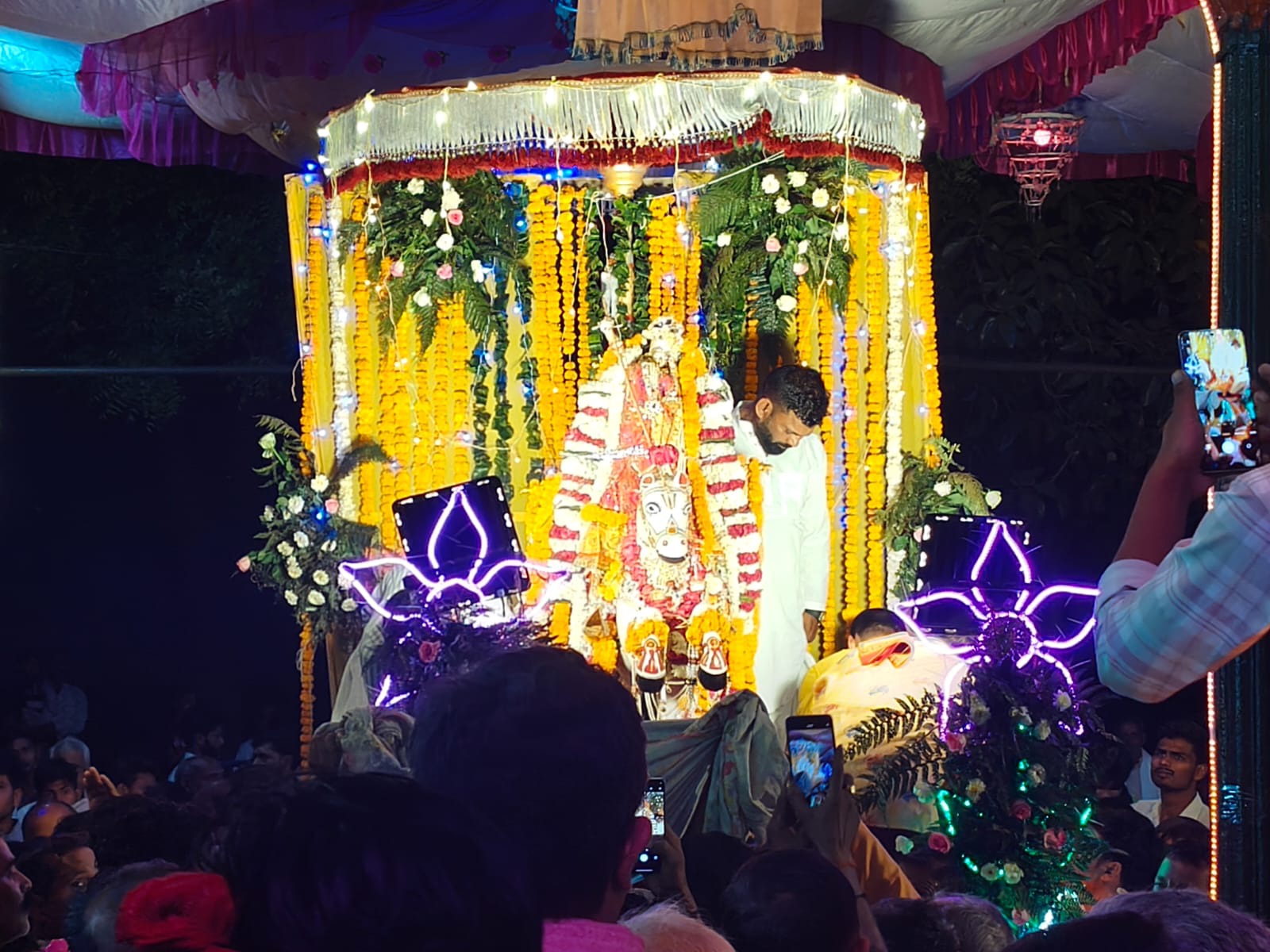
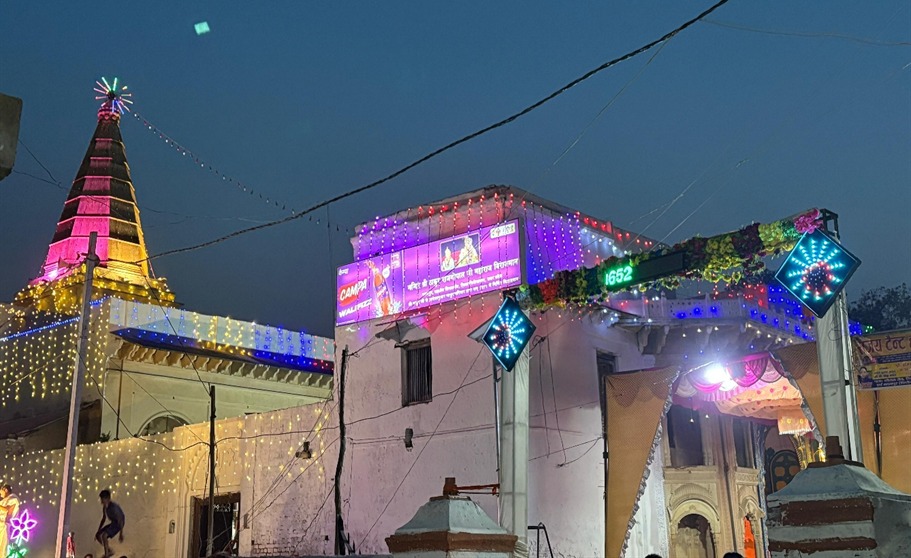
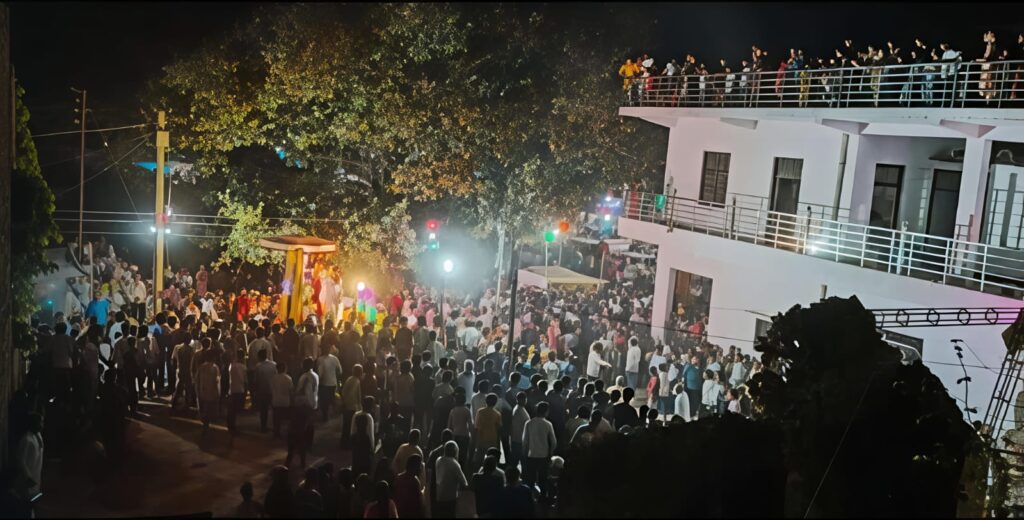
We cordially invite you all to attend the most famous holy festival of North India and seek the blessings of Sri Rajgopalji Maharaj. Only once in a year during Brahmoutsav, Sri Rajgopalji Maharaj give darshan to devotees on the wooden chariot. The 5-day program also includes their darshan in various other sawaris. The Brahamoutasav observes presiding deities Shri Rajgopalji Maharaj and Ammaji (Goddess Radha) procession riding on different on Vahanas, (Sawari) from temple precincts in evening amidst chanting of Veda mantras and Divya Prabandhams. The procession is followed by band, flags, along with huge mass of people to the village garden. Lord adorned with ornaments, garlands is accompanied with Chadi (छड़ी), chamar (चमर) and chatras (छत्र) in a royal procession- a sight to behold.
Mandir during Brahmotsavam
Sri Thakur Rajgopalji Maharaj Mandir during Brahmotsavam
Sawari in Village
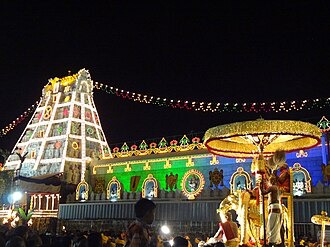
Sri Brahmoutsav at Tirumala Temple
Sawari in Village
Sri Thakur Rajgopalji Maharaj Sawari in Village Madanpur
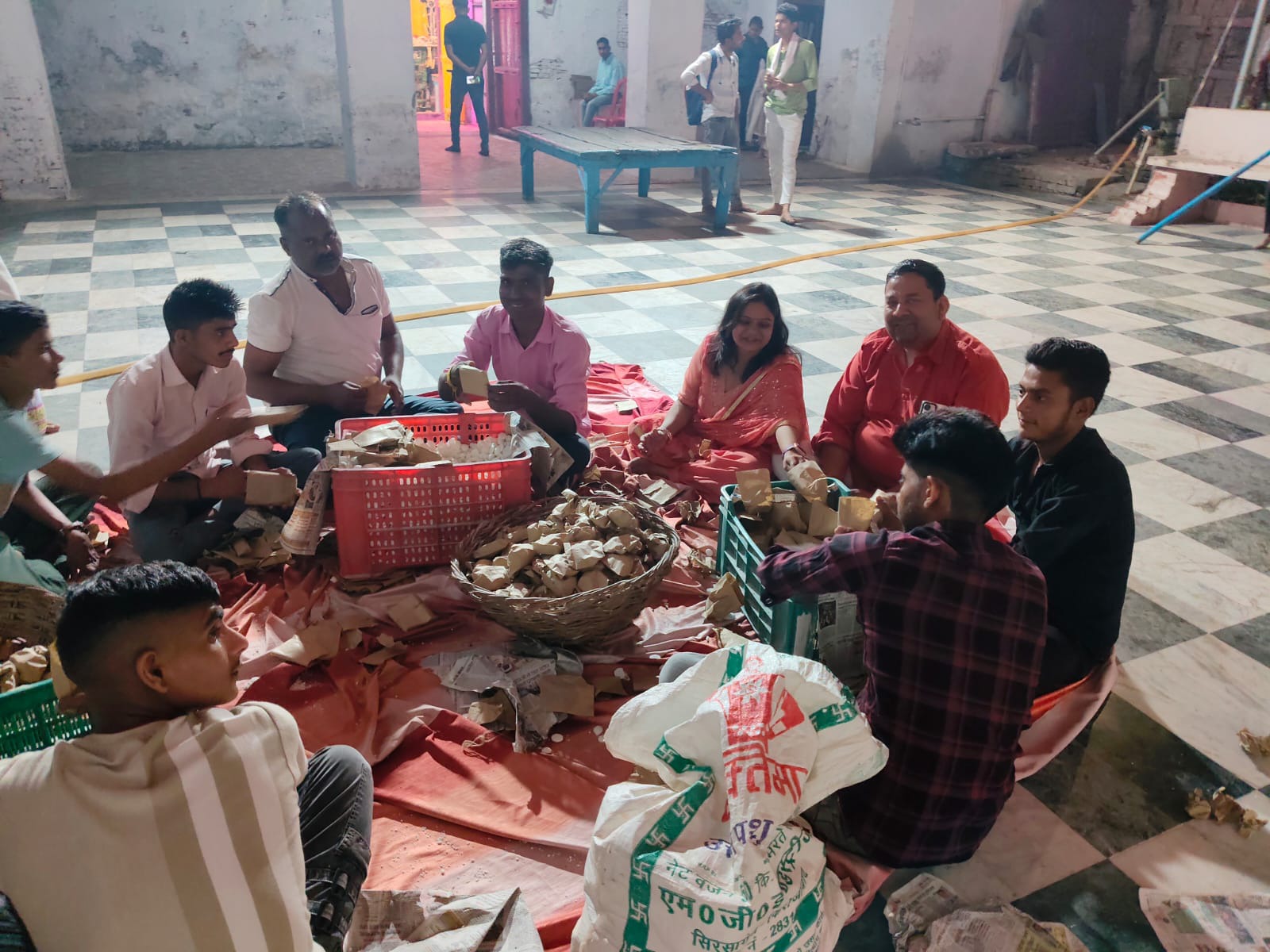
Prashad Seva
Prashad Seva by Devotees during Brahmotsavam

Sri Brahmotsavam Utsav Programme Details

(29th March - 2nd April 2026)
Sri Thakur Rajgopalji Ji Maharaj Mandir, Madanpur
SUN
29
MAR
SHRI SHESHANAGA VAHAN
09:00 PM to 11:00 PM
MON
30
MAR
SHRI GOVERDHAN VAHAN
05:30 PM to 06:30 PM
SHRI GARUDA VAHAN
10:00 PM to 11:45 PM
TUE
31
MAR
SHRI POORNAKOTHI VAHAN
05:30 PM to 06:30 PM
SHRI GAJA VAHAN
10:00 PM to 11:45 PM
wed
01
APR
SHRI HANSA VAHAN
05:30 PM to 06:30 PM
SHRI SIMHA SHAARDOOL VAHAN
10:00 PM to 11:45 PM
THU
02
APR
SHRI ASHVA VAHAN
09:00 PM to 01:30 PM
FRI
03
APR
SHANTI UTSAV & RASLILLA
8:30 PM onwards

Join the Utsava!

✦   ✦   ✦

We cordially invite you all to attend the most famous holy festival of North India and seek the blessings of Sri Rajgopalji Maharaj. Only once in a year during Brahmoutsav, Sri Rajgopalji Maharaj give darshan to devotees on the wooden chariot.

Brahmotsava Sevas

Poshak Seva

Rs. 2,001 (Poshak Only) Rs. 4,001 (Full Shringar)

Poshak seva for Rajgopalji and Ammaji will be offered on your name for anyone Sawari. Prasad collected from office or sent by post.

Sponsor

Bhog Seva

Rs. 2,501 (Phulera) Rs. 3,001 (Kheer) Rs. 1,501 (Boodi/Chana)

Bhog Seva for Rajgopalji and Ammaji will be offered on your name for one day. You can collect prasad as a sponsor on the premises.

Sponsor

Decoration

(Shanti Utsav)
Rs. 5,001 (Full) Rs. 501 (Part)

Contribution towards Jagmohan Decoration on Shanti utsav. Prasad collected from office or sent by post after Brahmotsav.

Sponsor
Sawari Seva

Vahan Pushpa Seva

Rs. 11,111 (Full) Rs. 501 (Part)

Seva of special floral (Pushpa) arrangement on procession of Gopalji on any one sawari (Garuda, Hansa, etc).

Sponsor

Gallery

Website Credits

Technical & Design Attribution

Powered by

Vedvan Group

IT Services

Temple Archivist &
Content Curator

Dr. (Mrs.) Suvigya
Mathur

Discover peace at our Buddhist center. Learn meditation, find wisdom, and join our community on the path to enlightenment.

Address :

Info :